Maximum
Overdrive
A solo kart racer with a track editor and saved replays. I developed it in Godot using GDScript.
Gameplay footage.
Overview
Players can create and share tracks, save races, and race against previous attempts. My work included the track editor, lap timing, and replay system.
Track editor
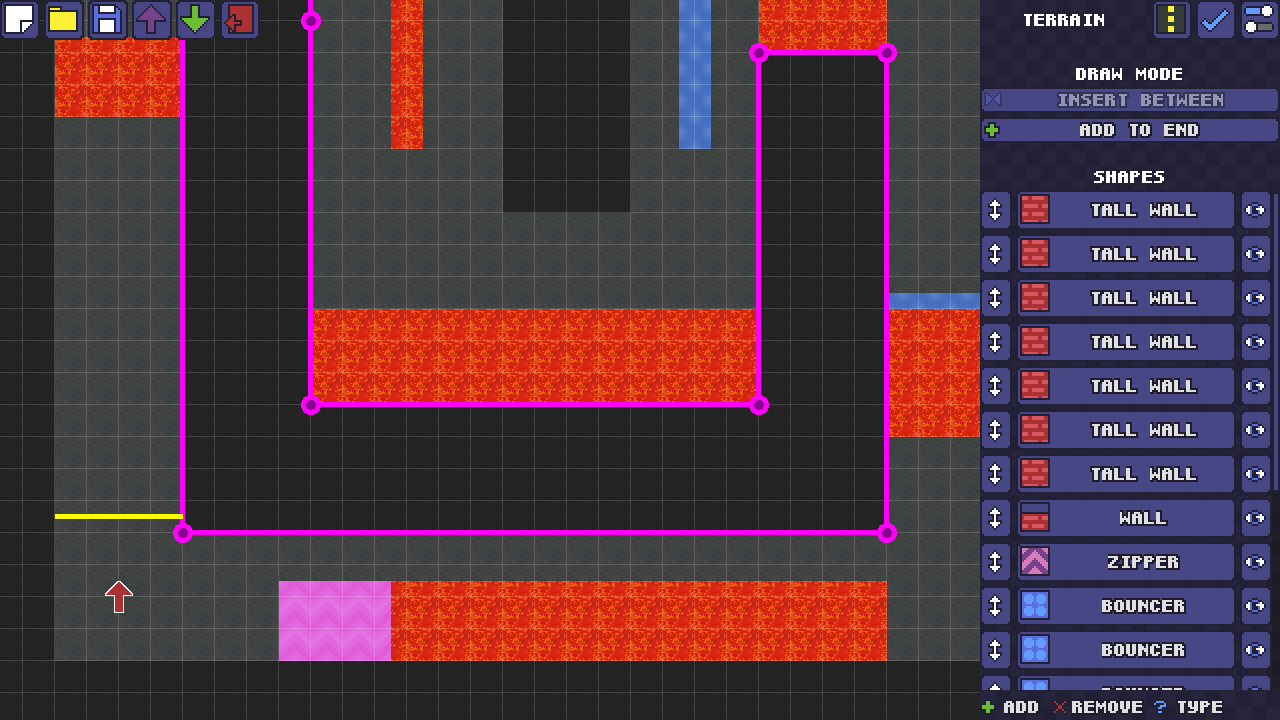
Each track is made from 2D polygons. Each polygon has a ground type, and the game converts those shapes into 3D geometry that the kart can drive on.
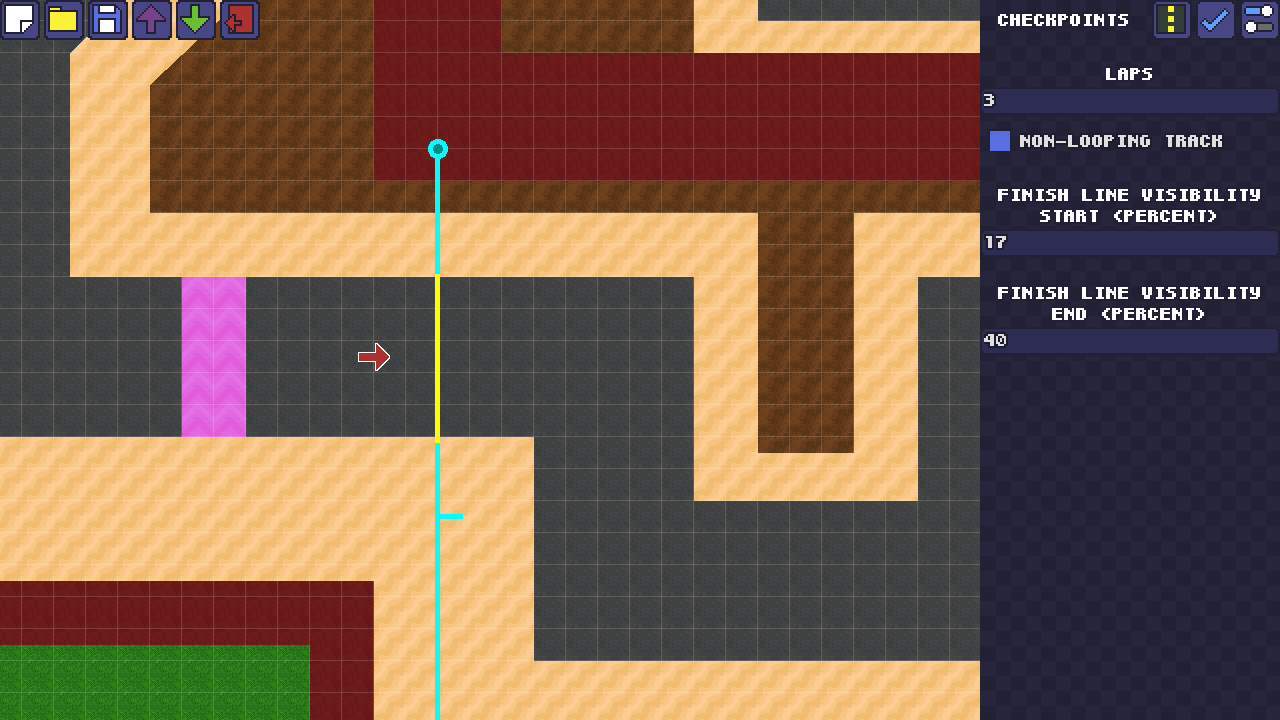
Tracks include at least one checkpoint. A lap counts only when the player crosses the checkpoints in the correct order.
Tracks can be exported and shared. Editing a track gives it a new ID, so the altered course is kept separate from the original.
Lap timing
If lap timing only checks which frame a kart crosses the finish line, two different crossings within that frame can receive the same time.
MXOD uses a shapecast to determine when the kart crosses the finish line within the frame. This gives lap timing finer resolution than counting whole frames alone.
Replays
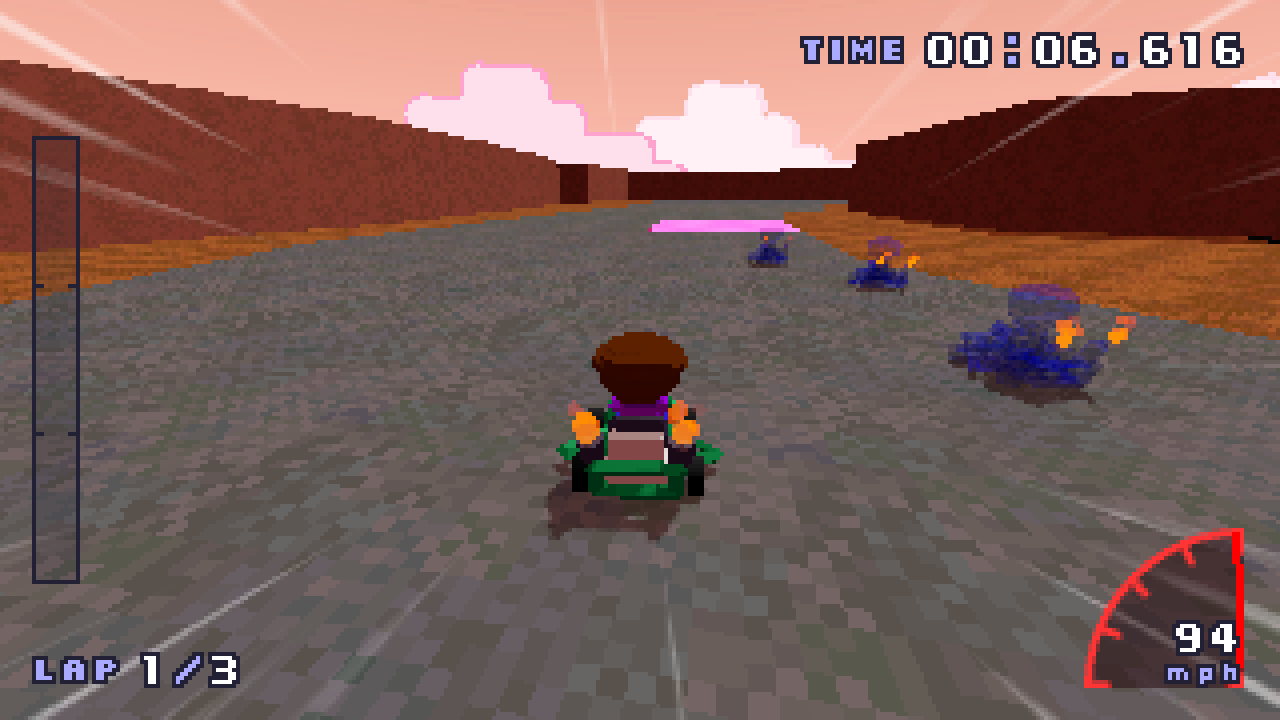
Players can save and share racing attempts, watch them back, or race against them. Multiple saved replays can be raced at the same time.
Replays store position data rather than inputs. Ghosts follow the recorded positions instead of simulating the race again.
The game automatically saves a replay for each new personal best. Players can also save runs manually.
Contact
Email me about gameplay programming roles.